
What Do Elephants Eat? Daily Care, Diet & Lifestyle Inside Jaipur Elephant Camps

Updated: May 27
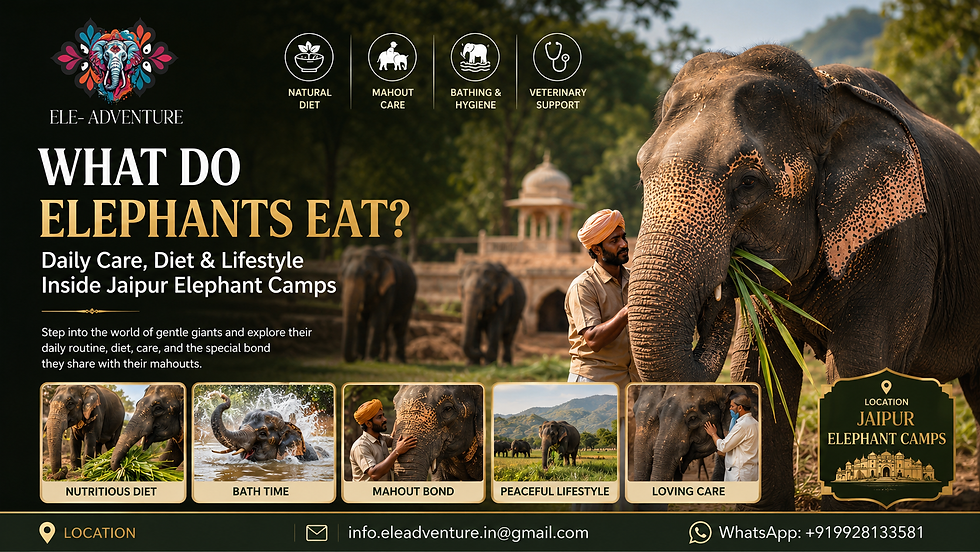
Jaipur is famous for its royal heritage, majestic forts, colorful culture, and unforgettable elephant experiences. Travelers from around the world visit Rajasthan to learn about elephants, interact with them responsibly, and experience the traditional bond between elephants and mahouts. But one question visitors ask most often is:
What Do Elephants Eat?
The answer is fascinating. Elephants are among the largest land animals on Earth, and their daily food intake, care routine, emotional behavior, and lifestyle require deep knowledge, dedication, and constant attention.
Inside many ethical elephant camps and elephant villages near Jaipur, elephants follow a carefully managed routine that includes feeding, bathing, walking, social interaction, veterinary care, enrichment activities, and rest. Understanding their lifestyle helps visitors appreciate why responsible elephant tourism matters.
This guide explores everything about elephant diet, daily routine, seasonal food habits, elephant care programs, mahout relationships, and life inside Jaipur elephant camps.
Understanding the Diet of Elephants
Elephants are herbivores, meaning they eat only plant-based food. Because of their massive size, elephants need a huge amount of food and water every day to stay healthy.
An adult elephant can eat:
150–250 kilograms of food daily
100–200 liters of water daily
Their diet depends on:
Weather conditions
Seasonal availability
Activity level
Age and health condition
Veterinary recommendations
At ethical camps like those near Hathi Gaon Jaipur, caretakers ensure elephants receive balanced nutrition throughout the day.
What Foods Do Elephants Eat in Jaipur?
Elephants in Rajasthan usually eat a combination of natural vegetation, grains, fruits, and nutritional supplements.
Common Foods Given to Elephants
Green Fodder
Fresh green grass is a major part of their diet. It provides fiber and supports digestion.
Sugarcane
One of the favorite foods of elephants. Rich in energy and loved during interaction sessions.
Bananas
Often used during visitor feeding sessions and training rewards.
Millet & Grains
Rajasthan’s traditional grains help provide strength and nutrients.
Tree Leaves & Branches
Elephants naturally enjoy chewing leaves and branches for long periods.
Seasonal Fruits
Watermelon, papaya, apples, and cucumber are sometimes added during hot weather.
Dry Fodder
Hay and dry grass support digestion and help maintain dietary balance.
Many visitors enjoy participating in Elephant Feeding in Jaipur, where they can learn how elephants eat and interact gently with them during supervised feeding sessions.
Why Elephants Eat So Much?
Elephants are extremely large mammals with powerful muscles and high energy needs. Unlike carnivores that consume calorie-dense food, herbivores need large quantities of plant material to maintain energy.
Elephants spend:
14–18 hours daily eating
Several hours walking
Time socializing and resting
Their digestive system processes food quickly, which is why they continuously eat throughout the day.
Morning Routine Inside Jaipur
Elephant Camps
Life inside an ethical elephant camp starts early.
Sunrise Routine
Before sunrise, mahouts begin preparing for the day.
The morning routine usually includes:
Health inspection
Cleaning resting areas
Fresh water preparation
Early feeding
Walking sessions
Many camps now offer a Sunrise Elephant Experience, allowing visitors to observe elephants during their calmest and most natural hours.
Morning is considered the best time for:
Feeding interactions
Photography
Learning elephant behavior
Walking experiences
The Bond Between Mahouts and Elephants
One of the most important aspects of elephant care is the relationship between elephants and mahouts.
Who Is a Mahout?
A mahout is the traditional elephant caretaker and companion. In Rajasthan, many mahout families have cared for elephants for generations.
Mahouts:
Feed elephants
Monitor behavior
Guide walks
Assist veterinarians
Build emotional trust
Elephants recognize:
Voice commands
Emotional tone
Familiar faces
Daily routines
The connection between a mahout and elephant often lasts decades.
Visitors participating in a Full-Day Mahout Experience in Jaipur can better understand this historic relationship and daily elephant care responsibilities.
Elephant Bathing & Hygiene Routine
Bathing is one of the most important parts of elephant care.
Why Bathing Matters?
Bathing helps:
Cool body temperature
Remove dirt and parasites
Prevent skin infections
Relax muscles
Improve emotional well-being
Elephants love water and naturally enjoy splashing, spraying, and playing.
Many ethical camps now organize Elephant Bathing in Jaipur experiences where visitors can help gently wash elephants using buckets and brushes under supervision.
Seasonal Diet Changes for Elephants
Just like humans, elephants need seasonal dietary adjustments.
Summer Diet
Jaipur summers are extremely hot, so elephants require:
More water
Hydrating fruits
Cooling foods
Electrolyte supplements
Popular summer foods:
Watermelon
Cucumber
Sugarcane
Green fodder
Bathing frequency also increases during summer months.
Winter Diet
During colder months, elephants receive:
Energy-rich grains
Warm fodder mixtures
Mineral supplements
The goal is to maintain body warmth and strength.
Monsoon Care
During rainy season:
Foot care becomes essential
Hygiene monitoring increases
Wet fodder quality is checked carefully
Veterinary teams inspect elephants regularly to prevent infections.
Veterinary Support Inside Elephant Camps
Modern elephant camps increasingly focus on veterinary supervision and animal welfare.
Regular Health Monitoring Includes
Weight monitoring
Foot inspections
Dental checks
Skin care
Digestive health
Vaccination schedules
Professional veterinarians work with mahouts to maintain elephant health year-round.
Ethical elephant camps prioritize:
Proper nutrition
Stress-free environments
Regular movement
Medical support
This shift toward responsible care is improving the reputation of Elephant Sanctuary Jaipur tourism experiences.
Elephant Behavior Facts Visitors Should Know
Elephants are highly intelligent and emotional animals.
Interesting Elephant Facts
Strong Memory
Elephants can remember routes, people, and experiences for years.
Emotional Intelligence
They show empathy, affection, and social bonding.
Family-Oriented Animals
Elephants naturally live in groups and maintain close relationships.
Communication Skills
They communicate using:
Sounds
Body language
Vibrations
Touch
Love for Play
Elephants enjoy water, mud baths, and playful interaction.
Responsible programs such as Elephant Fun Jaipur activities focus on enrichment instead of entertainment.
Walking With Elephants in Jaipur
Walking experiences are becoming more popular than traditional riding activities.
A peaceful Heritage Walk With Elephants allows visitors to:
Walk beside elephants
Observe natural movement
Learn behavioral patterns
Experience rural Rajasthan landscapes
Some camps also organize a Sunset Heritage Walk With Elephants, offering scenic evening walks during cooler temperatures.
These experiences create a calmer and more educational environment for both elephants and visitors.
Ethical Elephant Tourism in Jaipur
Modern travelers increasingly prefer ethical wildlife tourism.
What Ethical Camps Focus On
Natural elephant behavior
No harmful treatment
Veterinary supervision
Controlled visitor interaction
Enrichment activities
Education-based experiences
Responsible camps in Elephant Village Jaipur areas now focus more on:
Care programs
Feeding sessions
Walking experiences
Cultural learning
instead of commercial entertainment.
The Role of Hathi Gaon Jaipur
What Is Hathi Gaon?
Hathi Gaon Jaipur is a specially developed elephant village near Amber Fort where many elephant families and mahouts live.
The area was created to:
Improve elephant housing
Organize elephant care facilities
Support mahout communities
Enhance tourism management
Travelers often search online for:
Hathi Gaon Jaipur Timings
Hathi Gaon Jaipur Ticket
Hathi Gaon Jaipur Distance
Hathi Gaon Jaipur Price
because it has become one of Jaipur’s most recognized elephant tourism locations.
Elephant Care Programs for Visitors
Educational tourism is growing rapidly.
A well-designed Elephant Care Program in Jaipur allows visitors to participate in:
Feeding
Bathing
Walking
Understanding elephant communication
Learning welfare practices
These programs help tourists connect emotionally with elephants while supporting responsible tourism.
Elephant Painting Traditions in Jaipur
One of Rajasthan’s historic traditions includes decorative elephant artwork during festivals and celebrations.
Modern ethical camps offering Elephant Painting in Jaipur usually focus on:
Natural colors
Temporary decorative art
Cultural storytelling
Educational demonstrations
Visitors should always choose camps that prioritize elephant comfort and safety.
Family-Friendly Elephant Experiences
Families visiting Jaipur often look for safe and educational activities for children.
A Family Elephant Experience in Jaipur typically includes:
Gentle feeding
Cultural learning
Short walks
Photography
Interaction sessions
These programs create memorable experiences while teaching children about wildlife respect and conservation.
Night Routine Inside Elephant Camps
After sunset, elephants begin relaxing routines.
Evening care includes:
Final feeding
Water supply
Health checks
Cleaning areas
Rest preparation
Some travelers enjoy a Night Stay With Elephants in Jaipur, where they can experience the peaceful atmosphere of elephant villages and learn about traditional mahout lifestyles.
Elephant Safari Jaipur Experiences
Tourists often search for Elephant Safari Jaipur experiences while planning Rajasthan trips.
Modern safari-style elephant experiences now focus more on:
Nature interaction
Educational tourism
Village walks
Ethical elephant observation
rather than heavy commercial activities.
Elephant Sanctuaries vs Traditional Tourism
There is increasing awareness about responsible animal tourism worldwide.
An ethical Elephant Sanctuary Jaipur experience generally focuses on:
Rescue support
Welfare-first tourism
Reduced stress activities
Veterinary care
Natural routines
Travelers today prefer learning-based experiences over purely entertainment-based activities.
Elephant Ride Jaipur: Changing Tourism Trends
Historically, Amber Fort Jaipur Elephant Ride experiences were extremely popular among tourists visiting Rajasthan.
However, tourism preferences are evolving.
Many visitors now prefer:
Feeding experiences
Walking activities
Sanctuary visits
Educational programs
Ethical tourism discussions have encouraged camps to introduce alternative interaction models focused on care and conservation.
Why Elephant Experiences Build Cultural Understanding?
Elephants have been connected to Rajasthan’s culture for centuries.
They appear in:
Royal processions
Temple traditions
Historic festivals
Folk stories
Art and architecture
Experiences like:
Elephant Feeding in Jaipur
Elephant Bathing in Jaipur
Full-Day Mahout Experience in Jaipur
help visitors understand this cultural relationship in a more meaningful way.
Responsible Visitor Guidelines
When visiting elephant camps:
Choose ethical operators
Avoid aggressive handling practices
Respect elephant space
Follow mahout instructions
Avoid loud behavior
Support welfare-focused tourism
Responsible tourism helps improve living conditions for elephants and mahout communities.
Best Time to Visit Elephant Camps in Jaipur
October to March
The best season due to cooler weather.
Ideal for:
Walking experiences
Feeding programs
Outdoor photography
Summer Months
Morning experiences are recommended because afternoons become extremely hot.
Activities like:
Sunrise Elephant Experience
Bathing sessions
Feeding programs
are more comfortable during early hours.
Final Thoughts
Elephants are intelligent, emotional, and socially complex animals that require immense care, nutrition, attention, and emotional bonding. Inside Jaipur elephant camps, their daily life revolves around feeding, walking, bathing, social interaction, rest, and ongoing care from experienced mahouts and veterinary teams.
As tourism evolves, visitors increasingly seek ethical and educational experiences that prioritize elephant welfare and cultural understanding. Programs like Elephant Feeding in Jaipur, Elephant Bathing in Jaipur, Heritage Walk With Elephants, and Elephant Care Program in Jaipur help travelers connect more responsibly with these magnificent animals.
Whether you want to explore Hathi Gaon Jaipur, enjoy a Sunrise Elephant Experience, or simply learn more about elephant care and lifestyle, understanding what elephants eat and how they live creates a deeper appreciation for Rajasthan’s rich elephant heritage.
If you are planning your next wildlife and cultural journey, now is the perfect time to Book Elephant Experience activities that support ethical tourism and create unforgettable memories with the Best Elephant Experience in Jaipur.


Comments